Home / Support & Resources / Learning Center / Fall Prevention Statistics

Updated January 22, 2026 · 2 min read
Fall Prevention Statistics
Fall Prevention Statistics


Fall Prevention Statistics

Additional Fall Statistics:

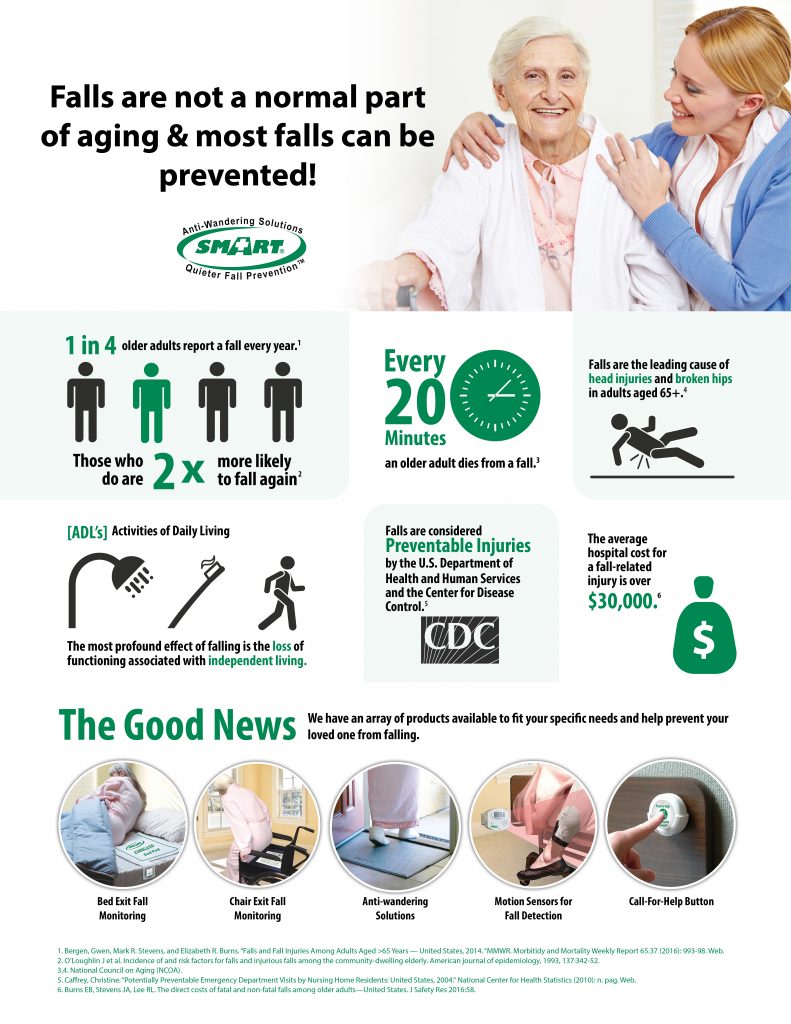
  • According to the National Council on Aging statistics, every 11 seconds an older adult is treated in the emergency room for a fall.
  • 1 in 3 older adults- about 12 million- fall every year in the U.S.
  • Over ½ of all falls take place at home.
  • More than 80,000 people a year are sent to the hospital for falls due to pets.
  • When an elderly person falls, their hospital stays are almost twice longer than those of elderly patients who are admitted for any other reason.
  • The risk of falling increases with age and is greater for women than men.
  • Annually, falls are reported by one-third of all people over the age of 65.
  • Two-thirds of those who fall will do so again within six months.
  • Falls are the leading cause of death from injury among people 65 and older.
  • Approximately 9,500 deaths in older Americans are associated with falls each year.
  • More than half of all fatal falls involve people 75 or over.
  • Among people aged 65 to 69, one out of every 200 falls results in a hip fracture. That number increases to one out of every 10 for those aged 85 & older.
  • One-fourth of seniors who fracture a hip from a fall will die within six months of the injury.
  • About ½ to up to ¾ of all adults living in long-term care settings suffer a fall each. This rate is twice as large as the rate of falls which occur for elders living in a community.
  • Injuries from falls account for roughly 36 percent of potentially preventable visits to the hospital emergency room by nursing home patients.
  • Between 16 percent and 27 percent of nursing home falls occur due to environmental hazards such as inadequate lighting or slippery floors within nursing homes.
  • The CDC (U.S. Centers for Disease Control and Prevention) receives between 100 and 200 reports of nursing home falls each year from average-sized (approx. 100 beds for elder residence) nursing homes.
  • Nursing home falls frequently cause a disability, functional decline, reduced independence, and reduced quality of life for an elderly person. Patients with a fear of nursing home falls may also experience feelings of helplessness, loss of function, depression, anxiety, and social isolation. It is important to take precautions both in and out of a nursing home facility to prevent elderly falls, fractures and injury.

References:

National Council on Aging (NCOA)

Mayo Clinic

Learn Not to Fall.  “How Often Falls Occur”. Web 2012.

United States. Centers for Disease Control and Prevention.

Caregiver Snapshot

Falls often result in life-altering hip fractures or a cycle of "fear-of-falling" that limits mobility, making them the leading cause of injury-related death for adults over 65. The silver lining is that most falls are preventable. Simple steps like clearing pathways, improving lighting, and using smart monitoring tools can reduce your loved one's risk.

Have Questions?

Need help? Call or chat with our U.S.A. support team—real people, real product expertise.

Call Us

Call Us

1-800-650-3637

Monday - Friday: 7:00 am to 3:30 pm Pacific Time

Live Chat

Live Chat

To chat with a real human located here in the USA, click on the icon in the bottom right corner of the page

Email Us

Email Us

Reach us at csr@smartcaregiver.com and we will answer your email within one business day.